

XR in healthcare: what it is and how it’s transforming medicine

Share:

Copy link

Share via Telegram

Share on Facebook

Share on LinkedIn

Share via WhatsApp

Share on X

Share via Email

We’ve been feeling the transformative effects of technology in healthcare for some time now. But as the world continues to innovate, leaps are made that bring new things to get excited about. One such feature is extended reality, or XR for short, a unique technology that blends the real world with digital experiences in a dazzling way.
So, how can this be applied to medicine? XR is making it possible to teach, practice, and deliver healthcare in ways that would have been considered Hollywood sci-fi not so long ago. Doctors can learn and prepare more effectively, patients get better care, and even surgeries are being planned with the help of XR tools.
Since XR’s impact is growing fast, we're only beginning to see what’s possible. In this article, we’ll explore the meaning of XR in medical terms, how it’s being used today, and why it’s set to change the future of medicine.
What is XR in medical terms?
Extended reality (XR) is an umbrella term that includes virtual reality (VR), augmented reality (AR), and mixed reality (MR). Together, these technologies create immersive digital environments that can either fully simulate real-world scenarios or overlay digital information onto the physical world.
But XR in healthcare is more than just a tech buzzword, though. It’s a tool that helps medical professionals train, plan, and perform procedures more effectively.
According to a report by IMARC Group, the global healthcare extended reality market was valued at $7.8 billion in 2024 and is projected to reach $67.7 billion by 2033, growing at a CAGR of 26.98% from 2025 to 2033.
So, as the technology matures alongside positive user experiences, medical XR is quickly moving from experimental projects into mainstream healthcare practices.
Key applications of extended reality in healthcare
Due to its inherent versatility, XR shines brightly in an array of medical areas. Let’s take a closer look at the key ways it’s being used:
Medical education
Extended reality is becoming increasingly popular in medical education because of how it lets students immerse themselves in learning environments and practice complex procedures risk-free.
VR technology in healthcare does this by creating fully simulated 3D environments where students can explore all aspects of human anatomy, practice surgical techniques, and interact with dynamic patient scenarios without concern or fear. The main benefit being an unlimited potential for repetition, which enables learning, giving a much clearer understanding of spatial relationships, and all-important hands-on experience with procedures.
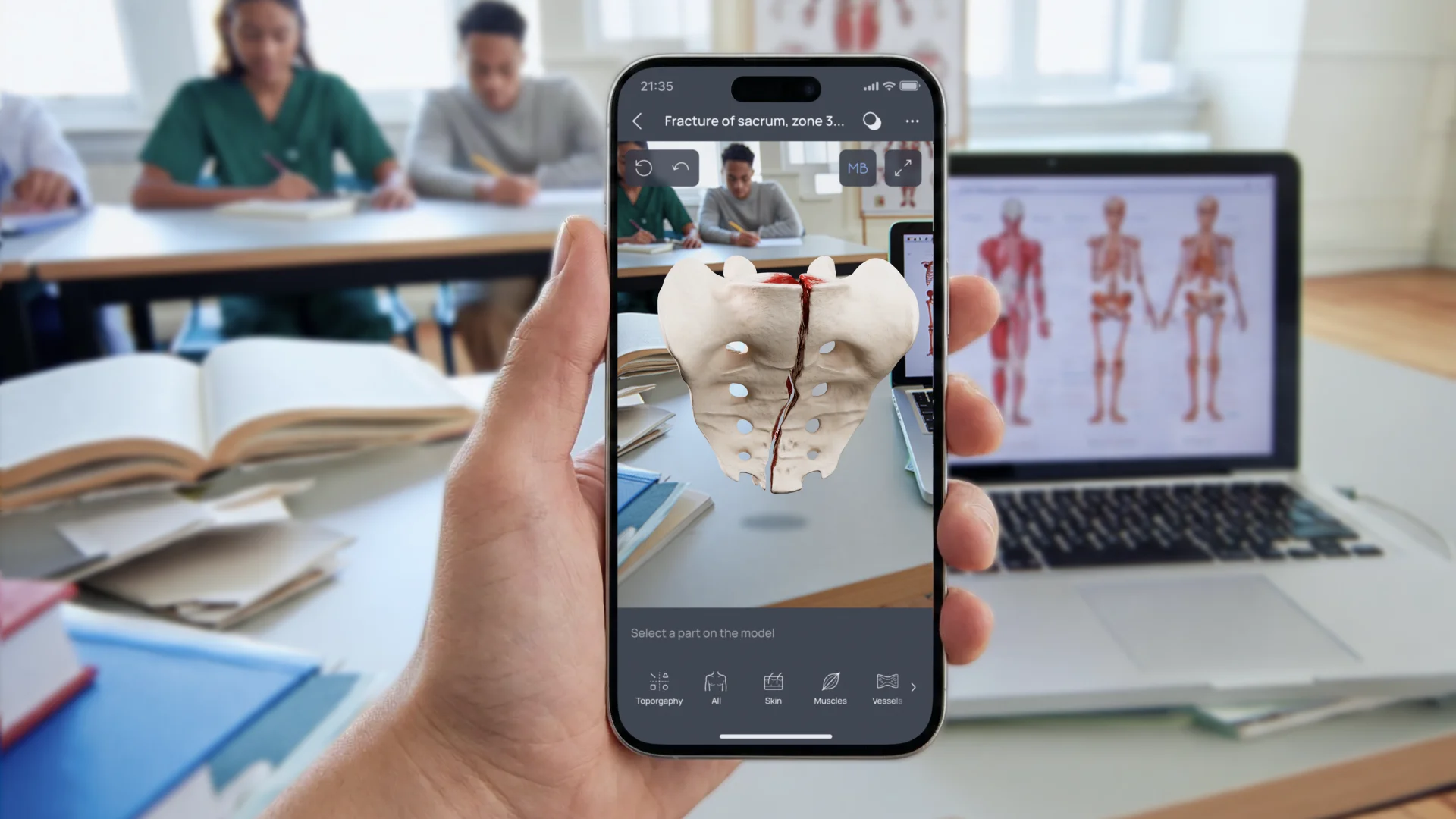
Augmented reality, on the other hand, overlays digital information onto the real world, letting students interact with virtual anatomical structures while still seeing their physical surroundings. For instance, VOKA 3D Anatomy & Pathology includes an AR mode that can be used during training sessions. It enables learners to study organs, tissues, and pathological changes directly on a table or mannequin. This approach makes it possible to combine real-world context with interactive 3D visuals.
Key benefits of XR in medical training:
-
Provides a scalable addition to cadaver-based learning;
-
Standardizes training experiences for all students;
-
Enables simulation of rare or complex medical cases;
-
Supports collaborative learning in virtual environments;
-
Helps students understand spatial relationships in anatomy more intuitively;
Real-world application at UCSF
The University of California, San Francisco (UCSF), has adopted XR to enhance the learning experience for medical students. They use XR to practice procedures such as dynamically removing layers of tissue and organs. This virtual environment replicates patient reactions and movements, giving students a realistic, hands-on learning experience without any risk to real patients. This approach improves comprehension and allows for repeated practice without the ethical concerns and logistical challenges.
Why use XR for medical education?
Studies have shown that XR can significantly enhance medical education, offering measurable improvements in learning outcomes and skill acquisition.
-
A meta-analysis in Sustainability found VR-based training enhances both theoretical knowledge and practical skills compared to conventional approaches.
-
Studies in BMC Medical Education indicate that VR is particularly effective for teaching anatomy, leading to better retention and performance on assessments.
-
Another research in BMC Medical Education highlighted how intuitive VR environments are for students. Most students found moving through the virtual scenarios easy and user-friendly — 39% rated it as very easy, 31% as easy, and 27% as moderately easy. These results suggest that VR not only enhances learning but is also straightforward to implement in medical curricula.
By integrating XR, educators can provide a more engaging, repeatable, and risk-free learning experience that prepares students for the challenges of modern clinical practice.
Surgical training
XR in surgical training aids surgeons with immersive simulations, helping them develop skills and receive real-time guidance during procedures. Users can practice complex operations in a virtual environment, refine their skills, and gain confidence.
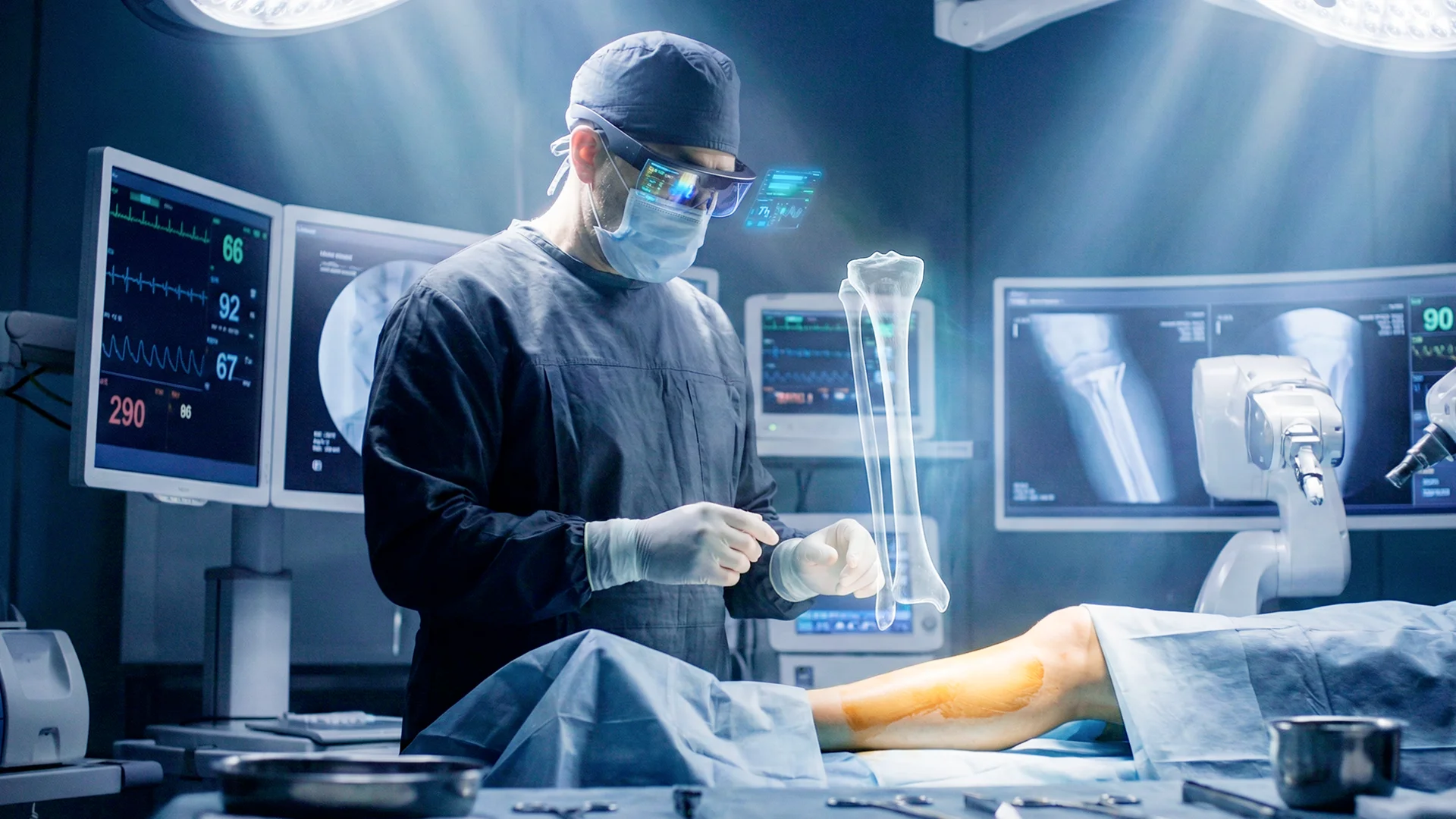
Beyond training, XR can also overlay critical information during real surgeries, helping surgeons visualize anatomy, tumors, X-rays, and ultrasounds in 3D without diverting attention from the patient.
Key benefits of XR in surgical practice:
-
Safe, risk-free rehearsal of complex procedures;
-
Improved hand-eye coordination and spatial awareness;
-
Enhanced decision-making with realistic surgical scenarios;
-
Visualization of patient-specific anatomy in 3D during procedures;
-
Streamlined integration of imaging data (X-rays, ultrasounds, CT scans) in real time;
-
Supports training and practice for rare or complicated surgeries;
Real-world applications at UCLA and the Cleveland Clinic
At UCLA’s David Geffen School of Medicine, VR-based surgical simulations with OssoVR have been shown to dramatically improve surgeon performance. For instance, surgeons training in tibial intramedullary nailing with VR experienced a 230% improvement in overall procedural performance compared to those trained with traditional methods. These simulations allow trainees to practice complex movements, understand patient-specific anatomy, and gain confidence before entering the operating room.
Building on this concept of immersive surgical preparation, surgeons at the Cleveland Clinic used Microsoft’s HoloLens to layer 3D projections of patient anatomy directly onto the body during procedures. This allows them to view organs, tumors, and imaging data in real time from multiple angles without looking away from the patient, reducing procedure time and improving accuracy.
Why use XR for surgical training and support?
Various studies demonstrate clear advantages of XR in surgery, showing its potential to enhance training, improve precision:
-
VR training allows surgeons to perform procedures more efficiently, reducing completion time. Research found that surgeons trained with VR completed simulated procedures in 9.6 minutes on average, compared to 12.2 minutes for those trained with traditional methods.
-
XR improves surgical skills and accuracy, reduces OR time and risks, and is accessible and effective for trainees with varying experience levels.
By combining immersive simulations with real-time procedural support, XR ensures surgeons are better prepared and capable of delivering safer, more effective care.
Patient care and rehabilitation
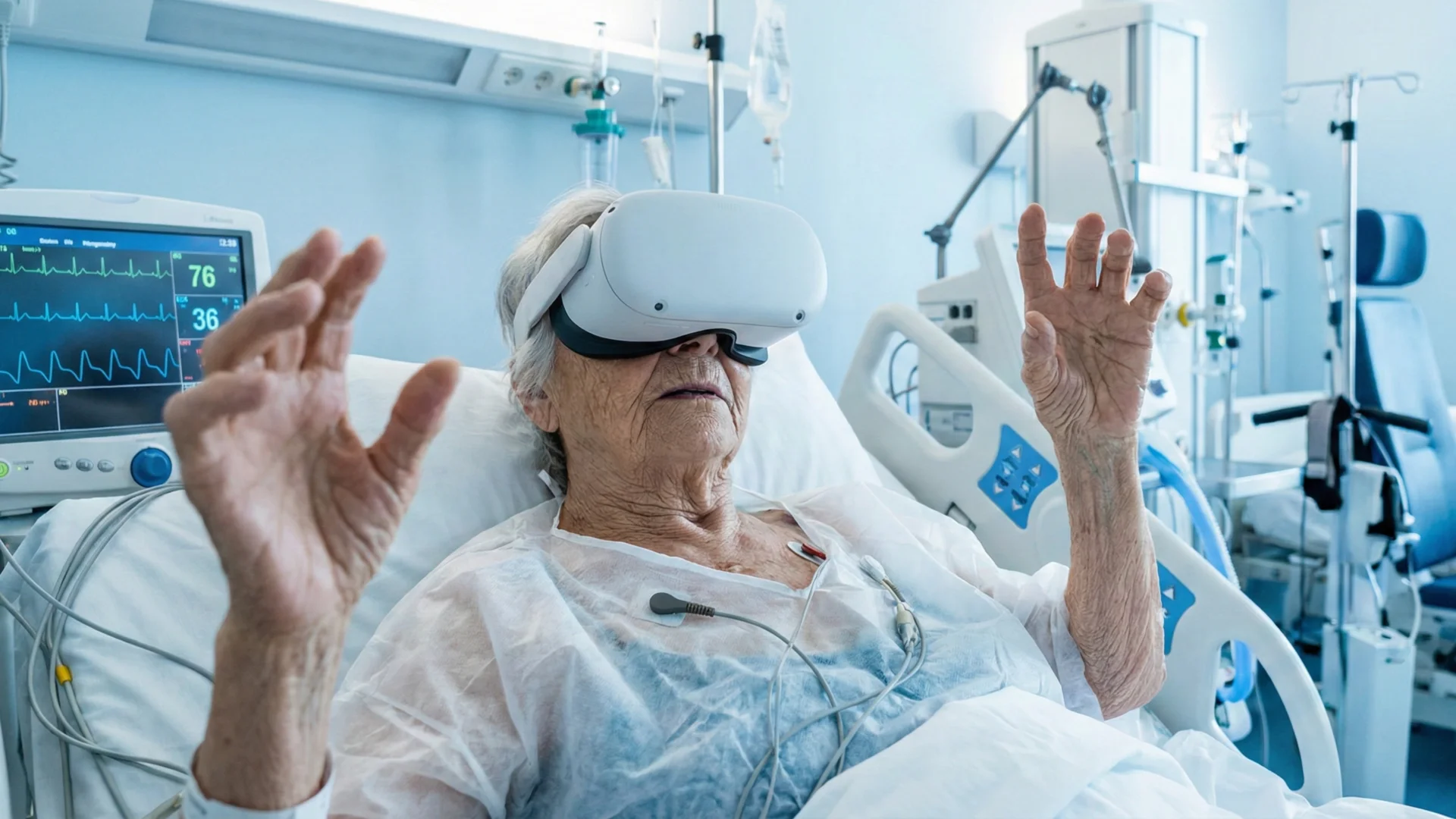
Extended reality is gaining momentum as a tool that delivers immersive and interactive experiences to support recovery, pain relief, and mental health therapy. XR technologies create safe, controlled environments where patients can engage in therapy, practice exercises, and receive real-time feedback, often with better outcomes than conventional methods.
Key benefits of XR in patient care:
-
Supports motor recovery and rehabilitation after neurological injuries;
-
Reduces reliance on medications for pain management;
-
Provides controlled exposure therapy for mental health conditions;
-
Fills gaps in training and care during public health emergencies.
Real-world applications
Stroke rehabilitation: XR is proving to be a powerful tool in stroke rehabilitation by turning repetitive, often exhausting therapy into something motivating. A Davis-based company, Cognivive, developed VR games that encourage stroke survivors to rebuild strength through interactive exercises. For example, patients use a virtual paddle to hit balls and break boxes, transforming therapy into a game-like experience while still focusing on motor recovery.
Pain management: Virtual reality is emerging as a safe, non-drug approach to pain management. By influencing attention and emotional states, VR helps block pain signals from reaching the brain. For example, a study of patients with neuropathic pain found a 69% reduction in pain during VR sessions and a 53% reduction immediately after.
Mental health support: Therapist-guided VR interventions have been effective in treating post-traumatic stress disorder (PTSD) among military veterans, especially those unresponsive to conventional therapy. One study found that veterans using VR reported a 19% greater reduction in PTSD symptoms over 12 weeks compared to those receiving standard care.
Exposure therapy: This type of behavioral therapy helps patients face fears or anxiety triggers in a safe, controlled environment. VR simulates real or imagined scenarios, allowing gradual, repeated exposure that reduces distress and strengthens coping mechanisms. It has been particularly effective for phobias, panic disorder, OCD, and trauma-related conditions.
COVID-19 emergency response: During the pandemic, XR technologies helped bridge training and experience gaps when healthcare systems were strained. More than 300 doctors at Los Angeles’ Cedars-Sinai hospital used VR to learn critical skills such as assessing patient symptoms and performing CPR while wearing protective gear.
Why use XR in patient care?
By combining immersive experiences with evidence-based therapy, XR offers a scalable, effective, and adaptable tool for modern healthcare.
-
Evidence-backed outcomes: VR leads to notable improvements in motor recovery and mental health compared to standard approaches.
-
High motivation and engagement: Patients report feeling more involved, making therapy feel less like a chore and more like a game.
-
Adaptable to challenging settings: Whether remote rehabilitation or pandemic constraints, XR remains accessible and effective.
XR adoption challenges
While extended reality shows clear benefits in healthcare, widespread adoption is not without its hurdles. Hospitals, universities, and clinics face both technical and practical challenges when integrating these tools into training, surgery, and patient care. Understanding these barriers is essential to making XR a sustainable part of modern medicine.
Key challenges include:
-
High implementation costs: Hardware like VR headsets and AR-enabled devices, along with custom software, can be expensive. Limited budgets in public healthcare systems often make large-scale rollouts difficult.
-
Technical limitations: Issues such as limited field of view, device comfort, latency, and motion sickness can reduce usability, particularly during long training sessions or procedures.
-
Integration with existing systems: XR tools must work seamlessly with electronic health records (EHRs), imaging software, and hospital IT infrastructure, which can slow down adoption.
-
Training requirements: Both medical staff and students need additional time and resources to learn how to use XR platforms effectively, creating an extra layer of onboarding.
Despite these challenges, the trajectory of XR in healthcare is promising. As hardware becomes more affordable, software more user-friendly, and evidence more robust, many of these barriers are likely to diminish.
For healthcare organizations, universities, and MedTech companies, overcoming these barriers often depends on choosing the right development approach from the start. Custom XR products need to balance medical accuracy, hardware compatibility, intuitive interaction design, data security, and integration with existing educational or clinical workflows. Medical VR & AR solutions help turn immersive healthcare concepts into practical applications for medical training, surgical simulation, patient education, rehabilitation, and product demonstration.
Key takeaways on using XR in healthcare
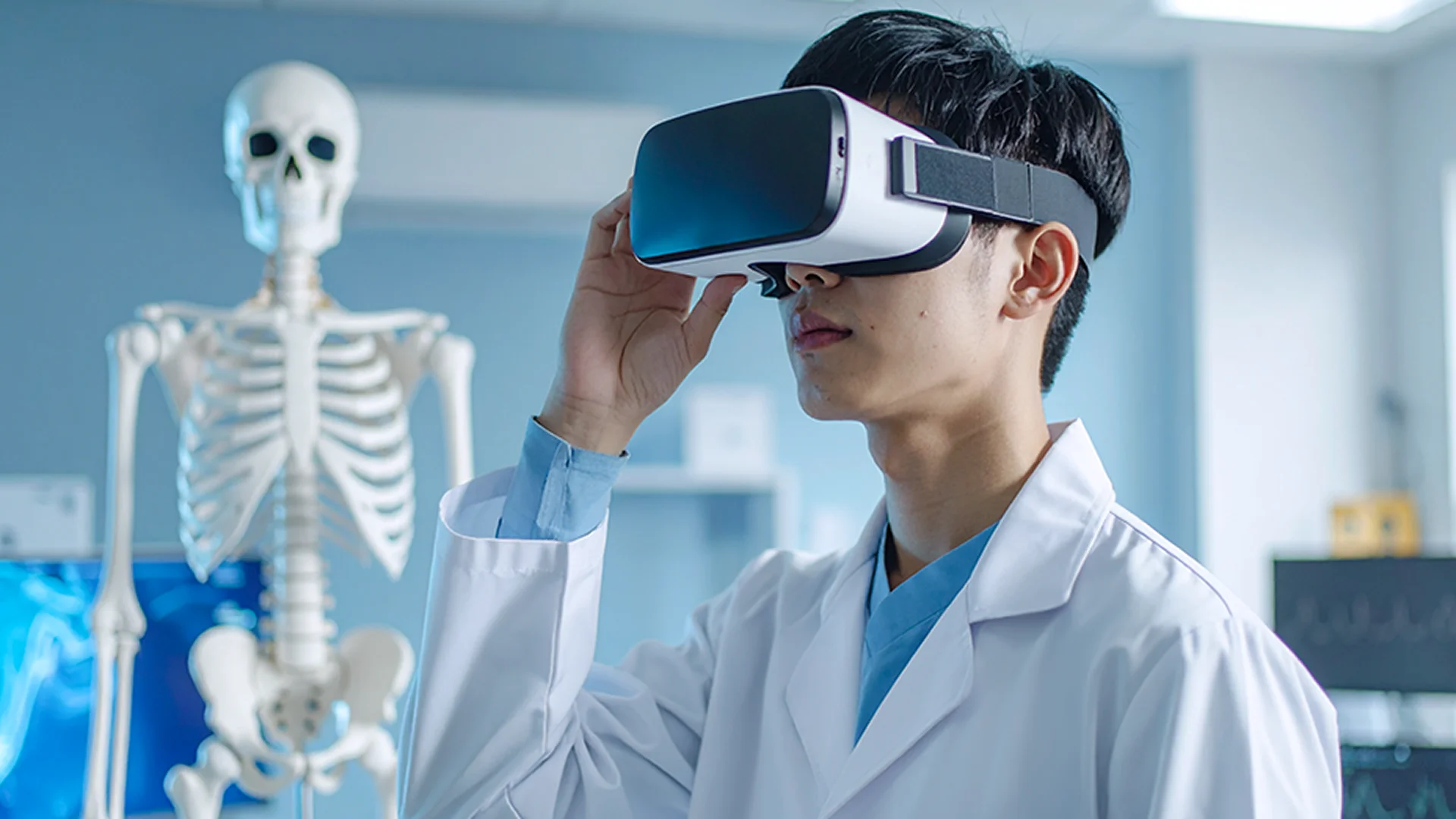
Extended reality steadily improves healthcare.
In medical education, it creates safe, immersive spaces where students can practice techniques repeatedly without risk, leading to better skill retention and confidence.
In surgery, XR simulations and real-time overlays support more precise interventions, reduce errors, and help surgeons prepare for complex cases with greater accuracy.
Patients also benefit directly, whether through VR-based rehabilitation programs that aid stroke recovery, immersive therapies that ease pain without opioids, or mental health applications that support those coping with conditions like PTSD. Even in times of crisis, such as the COVID-19 pandemic, XR proved its value by quickly training frontline doctors in essential skills.
While adoption barriers still remain, the evidence shows that XR delivers measurable improvements across education, clinical practice, and patient care. As the technology matures and becomes more accessible, XR is poised to move from experimental projects into everyday medical practice.
FAQ
1. What does XR mean in medical terms?
XR is a medical abbreviation that stands for Extended Reality. In the healthcare context, XR refers to technologies like VR, AR, and MR, which are used for purposes ranging from medical training and surgical support to patient care and rehabilitation.
2. How is XR used in healthcare?
XR in healthcare is applied in multiple ways: from medical education and surgical training to patient rehabilitation and pain management. For example, XR medical simulations allow surgeons to practice complex procedures in a risk-free environment, while patients benefit from immersive therapies that reduce pain, improve motor recovery after strokes, and support mental health treatments.
3. What are the benefits of XR in medical training?
XR medical training helps students and professionals gain hands-on experience without putting patients at risk. Virtual simulations improve skill retention, provide standardized training opportunities, and even prepare surgeons for rare or complex procedures. Studies show that XR training can lead to faster completion times, fewer errors, and better long-term knowledge retention compared to traditional methods.
4. Why is XR important in modern medicine?
Extended reality in healthcare is important because it bridges the gap between theory and practice. It creates safe, interactive environments where clinicians can learn and practice, while also giving patients access to innovative treatments. From XR medical applications in surgical support to mental health therapies, XR enhances precision, improves outcomes, and makes healthcare more efficient.
Make VOKA your preferred source
See more VOKA articles in Google Search

Share

Thank you for your comment!
Your comment has been submitted for moderation and will be published soon. We'll email you once it’s live.