

Doctor-patient communication: evidence-based models & professional standards

Share:

Copy link

Share via Telegram

Share on Facebook

Share on LinkedIn

Share via WhatsApp

Share on X

Share via Email

Table of contents
Doctor-patient communication directly affects how well patients understand their condition, follow treatment, and recover. That’s why modern clinicians need strong communication skills alongside their medical expertise.
This guide moves beyond basic empathy to explore evidence-based protocols and frameworks. We’ll also discuss the integration of 3D visualization tools like VOKA to standardize patient education, reduce cognitive load, and mitigate professional risks.
Shared decision-making (SDM) as a quality benchmark
A traditional model of "medical paternalism," where doctors act as the only decision-makers, is shifting towards a more collaborative dynamic. Shared decision-making has emerged as the gold standard for high-quality care. It is a process where clinicians and patients work together to select tests, treatments, and care plans based on clinical evidence. Such an approach allows for balancing risks and expected outcomes with patient preferences and values.
For effective shared decision-making, standard information should be collected and organized into mandatory, required, and optional categories. This data is then provided to the patient and other healthcare professionals involved in their care.
-
Mandatory (the information must be included/recorded). Date, location, patient seen by/responsible professional, problem list, shared decision point & current status, options, risks & benefits discussed.
-
Required (if it exists, the information should be included/recorded). Consultation method (e.g., face-to-face), consent for recording, other professionals present (and people accompanying the patient), and people involved in making the decision.
-
Optional (local choice if the information is included/recorded). Pre-discussion information, post-discussion actions.
A review of 14 studies on shared decision-making in South Korea indicated that SDM leads to higher patient satisfaction (10/14 studies), reduced decisional conflict (8 studies), and improved knowledge (9 studies).
In inpatient observations, common SDM behaviors included explaining issues and using language suited to the patient’s understanding. Less frequent were efforts to check comprehension or identify potential barriers.
The main advantages of SDM usage were the following:
-
Improved treatment adherence. Patients who are satisfied and involved in the decision-making process are more likely to follow their prescribed treatments.
-
Reduced decisional conflict. The process helps minimize the internal struggle or uncertainty patients feel when choosing between multiple treatment options.
-
Enhanced knowledge. Engaging in SDM increases a patient’s understanding of their clinical issue, as well as the risks and benefits of various options.
Evidence-based communication models for modern clinicians
To provide a structured approach to the clinical encounter, several validated frameworks have been developed. These models serve as doctor-patient communication guidelines, ensuring that no critical information is missed during a conversation. Therefore, implementing these frameworks is a key component of effective patient communication in healthcare, as they provide a repeatable standard for safety and clarity.
The SEGUE framework for structured conversations
The SEGUE framework is used to facilitate patient-physician communication by breaking the encounter into five distinct phases:
1
S – Set the stage.
Greet the patient, establish the reason for the visit, and acknowledge their perspective.
2
E – Elicit information.
Use open-ended questions to understand the patient’s story.
3
G – Give information.
Explain the diagnosis and treatment options in plain language.
4
U – Understand the patient’s perspective.
Check for understanding and address emotional concerns.
5
E – End the encounter.
Summarize the plan and confirm the next steps.
The SEGUE framework has several strengths. First, it is the longevity of the approach, as it has been successfully used for almost 30 years. SEGUE survived because it provides the universal fundamentals of a medical encounter. Other strengths include:
-
Consistency. It means that all five stages and their items work together harmoniously to measure one single concept: communication competence.
-
Good interrater reliability. It measures how much different "raters" (people watching and grading doctors) agree with each other. High interrater reliability means the framework is objective. It removes the personal bias of the grader because the checklist items are clear.
-
Ease of use. SEGUE is designed to be a simple, binary checklist, so it is easy to remember and recall during a quick 15-minute patient appointment.
However, there is also a significant weakness in the SEGUE framework. Several empirical studies have shown that instruments using binary response scales (yes/no), such as SEGUE, may not accurately measure differences in medical interviewing skill.
AIDET for patient experience
AIDET is a communication framework used in healthcare to enhance patient experience, decrease patient anxiety, and increase compliance through structured interactions. It stands for Acknowledge, Introduce, Duration, Explanation, and Thank You, where each represents a specific interaction phase with specific actions required.
1
A – Acknowledge.
Greeting patients by name, making eye contact, and acknowledging family members in the room.
2
I – Introduce.
Stating your name, specialty, and role in their care.
3
D – Duration.
Providing an estimated timeframe for tests or wait times to manage expectations.
4
E – Explanation.
Describing what will happen, why it is happening, and answering any questions to ensure understanding.
5
T – Thank You.
Expressing appreciation for their cooperation, patience, and for choosing your facility.

Despite its simplicity, the framework is still widely used by healthcare providers, especially by junior specialists. These five simple steps are beneficial from several perspectives:
-
Improved patient satisfaction. The dedicated report highlighted that one of the pediatric clinics reported a 2.6% Net Promoter Score increase to 83.3% after AIDET implementation.
-
Enhanced nursing practice. The research conducted with emergency nurses showed that AIDET eases anxiety, enhances empathy, and reduces complaints by providing clear info and team consistency.
-
Student confidence. Nursing students reported better patient-centered care, rapport, and relief from anxiety via AIDET. Short-term evaluations noted 96.6% of exposed patients valued it.
The SPIKES protocol for complex clinical scenarios
The SPIKES Protocol is a six-step framework for delivering bad news in clinical settings, particularly oncology, to ensure empathetic, structured communication. Developed in 2000, it helps clinicians gather patient input, share information, offer support, and plan collaboratively.
When delivering bad news or discussing life-altering diagnoses, the SPIKES protocol provides a structured, empathetic pathway:
1
S – Setting up the interview.
Implies ensuring privacy and involving family members.
2
P – Perception.
Making an assessment of what the patient already knows.
3
I – Invitation.
Asking how much information the patient wants to receive.
4
K – Knowledge.
Giving the information in small chunks, avoiding professional terminology.
5
E – Emotions.
Addressing the patient's emotional response with empathy.
6
S – Strategy & summary.
Laying out a clear plan for the future.
Trained clinicians report higher confidence in delivering bad news. The review noted consistent gains in performance (e.g., via independent raters/SP feedback) but no studies measured system or patient outcomes like satisfaction or anxiety reduction, highlighting research gaps. Cited 88+ times, it aligns with patient preferences for direct, honest delivery.
Best universal practices for effective doctor-patient communication
Frameworks give structure, but the success of a clinical encounter still depends on human-centered communication. In 2026, even with all the technology, the “human touch” matters more than ever, and being able to explain complex information clearly is essential for quality care. In this section, we’ll explore practical ways to do that.
Bridging the understanding gap with visual communication tools
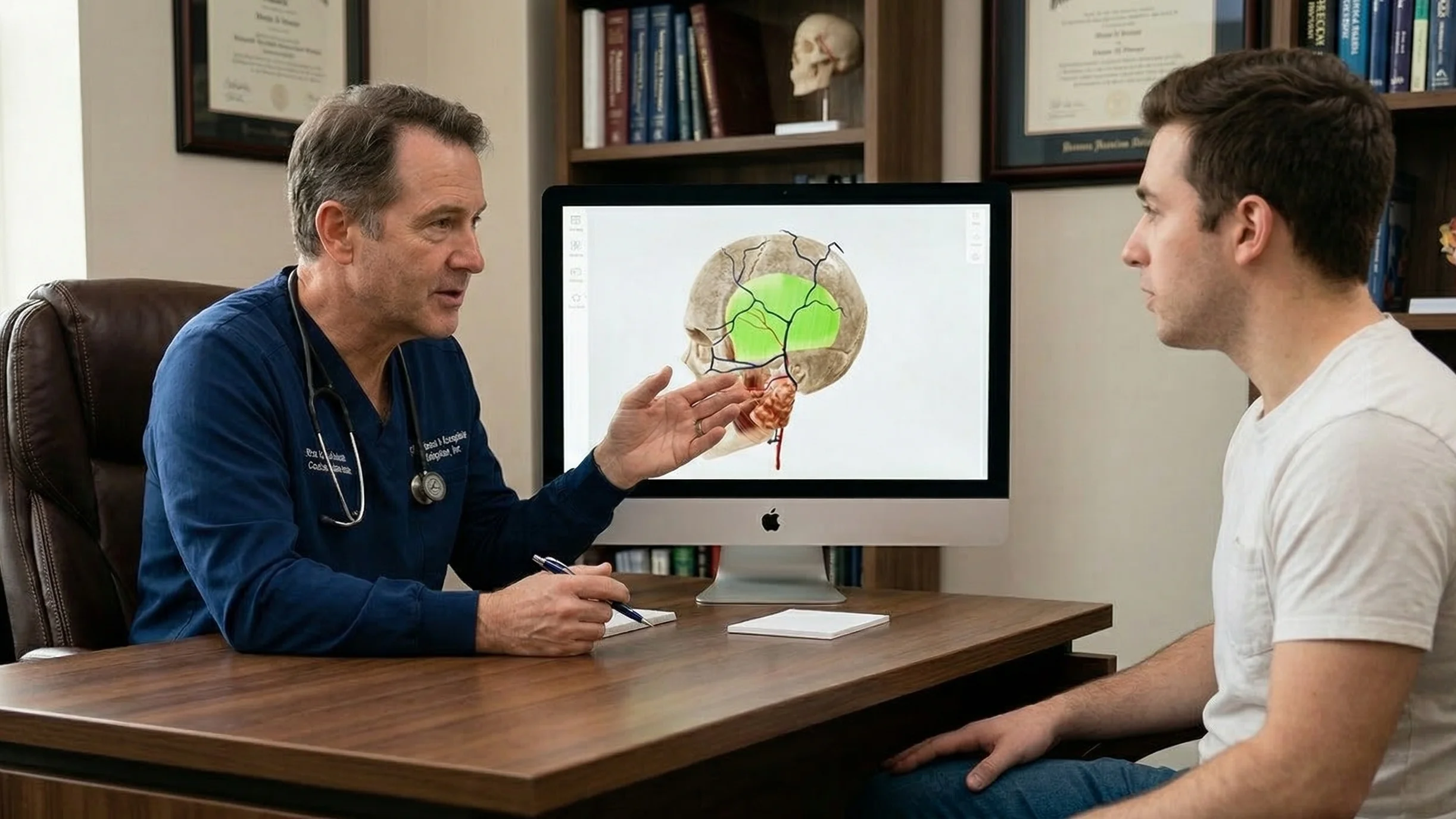
A major barrier to doctor-patient communication is the complexity of medical information. In a high-stress clinical encounter, patients have a much harder time processing verbal information. They often forget 40-80% of medical information immediately after hearing it. Moreover, some patients may struggle to understand the information at all due to limited health literacy.
One of the most effective ways to address this problem is using 3D visualization, which helps reduce cognitive load and standardize patient education.
High-quality 3D content can help in several ways:
-
Bypassing the "verbal bottleneck." 3D visuals help patients understand anatomy and procedures without heavy mental effort. Instead of trying to imagine an organ or surgery from verbal descriptions, patients can see a clear, accurate model or a video.
-
Overcoming low health literacy. Professional medical jargon can be intimidating. However, when a doctor uses a 3D model (for example, showing a heart with a visible blockage), it helps patients grasp the problem more clearly, even without prior medical knowledge.
-
Improving intercultural communication. Language and cultural differences can make medical explanations harder to understand. 3D visuals bridge this gap by presenting information in a visual format. Сlinicians can show conditions, procedures, or treatment effects directly, making communication more accessible for patients from different linguistic and cultural backgrounds.
-
Improving retention and compliance. When a patient truly sees the mechanism of a disease or treatment, the information is more likely to stick. This clarity often leads to higher adherence to post-encounter care instructions.
In practice, integrating 3D into clinical workflows doesn’t require complex changes. Clinicians can rely on accessible tools such as 3D anatomy models and medical animations.
During consultations, physicians can use 3D anatomy atlases like VOKA 3D Anatomy & Pathology, containing a library of high-fidelity models and interactive tools. By rotating, zooming, and isolating structures, doctors clearly demonstrate a patient’s condition and make the explanation far easier to understand.
Short narrated 3D animations also enhance consultations by guiding patients through dynamic processes, like a surgical procedure or the mechanism of action of the prescribed medication. Visualizing such concepts reduces anxiety and ensures patients better grasp the risks and expected outcomes.
Essential skills: empathy, verification, and pacing
In 2026, doctor-patient communication is defined by the integration of empathetic engagement, robust verification processes (both clinical and digital), and intentional pacing to manage high-tech care environments. As healthcare shifts from AI enthusiasm to AI accountability, these human-centric skills are deemed critical for fostering trust, reducing burnout, and improving clinical outcomes.
Empathy as the human core of healthcare
Empathy has evolved from a soft skill to a core clinical competency necessary for building trust and patient satisfaction. Professional empathy involves:
-
Emotional validation. Physicians must actively recognize, verbalize, and validate patient emotions, even when using telemedicine tools.
-
Narrative competence. Utilizing "active listening" practice through silent listening, mirroring, and echoing techniques helps confirm patient concerns.
-
Personalization. Empathy means tailoring communication to cultural and emotional contexts, supported by initiatives that promote inclusivity.
Verification: accuracy in clinical data and patient understanding
Verification is the key to ensuring safe care in various therapeutic areas, and it implies several traits:
-
"Teach-back method." Clinicians have to make sure that patients understand their explanations. They can do it by asking patients to repeat information in their own words to verify comprehension.
-
Digital data access verification. Modern digital identity verification (eIDV) systems secure the remote care environment by automating patient onboarding and utilizing multi-factor authentication. It ensures that sensitive medical data is only accessed by verified individuals, so the risk of unfair actions or human errors is reduced to a minimum.
-
Accurate documentation. Using tools like electronic health records (EHR) to verify patient identities, such as biometrics or photographs, is becoming a standard recommendation.
Pacing: structured communication in a busy clinical environment
The pace of consultation is critical to ensuring that patients are not overwhelmed, especially when we talk about remote and hybrid care delivery. Good pacing implies the following:
-
Strategic pausing and silences. Allowing for silence and deliberate, slow communication gives patients time to process complex information and express their own concerns.
-
Structured consultations (3E's). Medical professionals are being trained to "Educate" (keep the information simple), "Enlist" (partner with the patient, as they have the same goal of safe care), and "End" (ensure safe transition home).
-
Managing hybrid workflows. The 2026 care model involves a combination of in-person visits and the use of telehealth tools. It requires practitioners to efficiently pace information exchange, ensuring that patients receive timely updates via digital systems while not being overwhelmed.
"Webside manner": best practices for telemedicine professionals
"Webside manner" is the telehealth equivalent of "bedside manner," referring to a clinician's ability to communicate, show empathy, and build trust with patients during virtual visits.
Key components of such a practice include:
-
Proper visual communication and body language. Because the view is restricted to a screen, providers must make a conscious effort to show engagement, such as nodding, smiling, and sitting close enough to the camera to show facial expressions clearly.
-
Active listening and empathy. Active listening is essential to catch verbal cues, and empathy must be conveyed through voice tone and attentive, reassuring language.
-
Establishing presence. This involves looking at the camera rather than the patient's image on the screen to simulate eye contact.
-
Contextualizing the setting. Acknowledging the patient's home environment, ensuring privacy for both parties, and making notes are vital for maintaining engagement.
Do’s and don’ts for effective communication
The following table summarizes doctor-patient communication etiquette and best practices:
Ethical and legal dimensions of physician-patient interaction
Effective communication serves as the primary safeguard for both the patient’s health and the clinician’s professional security. In the modern regulatory landscape, the quality of the dialogue is often the deciding factor in whether a clinical encounter meets the legal standard of care.
Informed consent and patient autonomy
Informed consent is an ethical and legal process ensuring patients understand risks, benefits, and alternatives of treatment to make voluntary, autonomous decisions about their care.
The main aspect of informed consent and patient autonomy is maintaining effective communication, which means overcoming communication barriers. Therefore, healthcare providers should avoid professional medical jargon, use simplified terms, and allocate a reasonable amount of time to prevent misunderstandings and patients’ cognitive overload.
One more method is using dedicated 3D medical animations and explainer videos. Such content will simplify complex medical concepts for the patients and enhance clarity and engagement.
Mitigating malpractice risk through therapeutic alliance
Mitigating malpractice risk through a therapeutic alliance involves building a strong and empathetic relationship to reduce the likelihood of patients filing lawsuits even when adverse outcomes occur. Numerous studies presented in the National Library of Medicine indicate that malpractice claims are often driven by patient anger, feelings of being ignored, or broken trust rather than solely by the clinical error.
As for a healthcare provider, your key actions for reducing legal risk should be the following:
-
Ensuring informed consent. A thoroughly informed consent process involves a clear, honest discussion of risks.
-
Managing expectations. Patients are less likely to file a lawsuit if they understand potential complications and feel the doctor is transparent.
-
Immediate disclosure of errors. Open, honest, and prompt disclosure of adverse events and errors can help manage the situation and often prevents litigation.
-
Continuity of care. Building trust over time helps in minimizing misunderstandings.
Studies of primary care physicians and surgeons show that those with no history of claims spent more time with patients and used more targeted communication. Additionally, using visual aids to help patients understand risk numbers can deepen the partnership and improve comprehension.
Conclusion
To sum up, improving doctor-patient communication and the quality of care requires a systematic approach. By adopting evidence-based models like SEGUE and SPIKES, implementing shared decision-making, and integrating advanced visual aids for informed consent, clinicians can positively transform the patient experience.
If you are looking to integrate high-end 3D visualization into your clinical practice and patient communication, contact VOKA today. You can choose from our library of ready-made 3D animations and models, or collaborate with the team to create unique content tailored to your needs.
FAQ
1. What are the primary doctor-patient communication examples for junior doctors?
Junior doctors should focus on the SEGUE framework for structured history taking and the AIDET technique for building immediate rapport during hospital rounds. In addition, they should consider universal communication practices, such as empathic and structured listening.
2. How do modern healthcare economics impact communication time in 2026?
In 2026, healthcare economics witnesses a shift, using agentic AI to automate documentation. Now, clinicians are able to reinvest nearly 20% of their workday into direct patient dialogue. This transition to value-based care makes clear, visual-first communication a financial necessity for improving outcomes and reducing readmissions.
3. Why is effective doctor-patient communication essential for reducing malpractice risk?
Effective doctor-patient communication builds trust and clear expectations, reducing the likelihood of litigation. Patients are less likely to sue clinicians they feel have been honest, empathetic, and thorough in their explanations.
4. How can healthcare providers improve communication in intercultural settings?
By practicing cultural humility, using professional medical interpreters, and utilizing visual 3D models that bypass language barriers to explain anatomical concepts.
5. What are the common barriers to effective physician-patient communication in 2026?
Key barriers include high clinician burnout, the digital "screen barrier" of EHR systems, low patient health literacy, and the increasing complexity of treatment plans.

Share
Table of contents
Thank you for your comment!
Your comment has been submitted for moderation and will be published soon. We'll email you once it’s live.