

How to improve patient engagement: best tools & practices for healthcare providers

Share:

Copy link

Share via Telegram

Share on Facebook

Share on LinkedIn

Share via WhatsApp

Share on X

Share via Email

Table of contents
Let’s be honest, almost every healthcare organization tries to improve patient engagement. But very few actually succeed.
During a short visit, it’s hard for doctors to really connect with patients. Especially those who are skeptical or anxious.
In this article, we explain what you might have been doing wrong and which tools can keep people more involved in their care.
What is patient engagement, and why is it important?
First things first, let’s define the term.
Patient engagement means involving people in decisions about their care and motivating them to take action.
It goes beyond scheduling appointments or following prescriptions. Real engagement happens when people understand their condition and feel confident about their health choices.
In practice, an engaged patient looks like this:
-
Asks questions rather than passively receiving a treatment plan.
-
Follows recommendations between visits.
-
Uses extra tools to track progress or learn more.
-
Stays in touch with a specialist.
Why boost patient engagement?
For healthcare professionals (HCPs), hospitals, or private clinics, the answer is better operational efficiency. When people are engaged in their care, they help:
-
Reduce administrative burden by using digital tools and portals.
-
Lower operational costs by minimizing no-shows.
-
Save consultation time by using pre-visit education materials.
For pharma companies trying to overcome modern pharmaceutical industry challenges, the value is tied to treatment adherence and brand loyalty. Higher engagement helps:
-
Enhance data collection on patient behavior and decision-making.
-
Increase revenue by reducing therapy drop-offs.
-
Strengthen brand awareness by building trust and demonstrating ongoing care.
5 mistakes that kill patient engagement
Let’s discuss small pitfalls that quietly sabotage engagement before it even starts.
Mistake #1: Information overload
Ever been in a consultation where a doctor throws around medical jargon and complex details? When patients get too much info at once, they are more confused than informed.
Mistake #2: Ignoring human touch
The vibe during a visit really matters. If a doctor seems distant or cold, people just want to get out of the room quickly. No fancy app or portal can fix a lack of empathy and poor patient communication.
Mistake #3: Failing to integrate digital tools
If you’re not offering apps, portals, or telehealth as part of your service, you’re falling behind. Modern patients expect digital experiences to stay informed and connect with their providers.
Mistake #4: Sticking to old-school visuals
Some HCPs still try to explain a diagnosis with MRI scans that most people can’t read. Or simply hand out generic brochures. In both cases, patients lose attention and disengage.
Mistake #5: Measuring the wrong things
Tracking logins or app downloads alone doesn’t tell the full story. You need to focus on real outcomes, such as treatment adherence, participation in programs, and improved health choices.
Best strategies to increase engagement

So what should healthcare providers actually do in practice? Let’s discuss the approaches that build trust and encourage people to follow their treatment.
Shared decision-making
Today’s patients are much more informed than they used to be. They read, compare options, and come to appointments with questions. They don’t want to passively listen to the doctor’s instructions anymore.
Shared decision-making (SDM) reflects this shift. It’s about figuring things out together, focusing on a person’s lifestyle and choosing the best individual path.
In fact, studies support this approach. Research in JAMA shows that shared decision-making improves how actively patients participate in decisions and increases satisfaction.
Personalized patient education
Most educational materials in healthcare are still too generic. The same brochure, the same explanations for everyone. But what works for one person may not work for another.
To change that, HCPs should learn to adapt information to the individual. For some people, that means describing a disease with analogies. For others, it can be easier to grasp things through a short 3D animation.
When people clearly understand and feel in control, they’re much more comfortable providing informed consent about further treatment.
Proactive communication & feedback
Doctor-patient communication doesn’t stop at the clinic door. Healthcare organizations can stay in touch with clients through regular updates and follow-ups via portals, SMS, and email.
At the same time, patients are welcome to share their experiences through surveys or in-app feedback.
For clinics, this feedback is gold: it reveals the real impact of engagement efforts and further possible improvements.
Gamification
Healthcare is serious – no one’s denying that. But there is a place for game‑like elements when it comes to keeping people engaged with their care.
Gamification can come in various forms:
-
Health progress tracking.
-
Points & badges for treatment milestones.
-
Small rewards (digital or real) for sticking to treatment plans.
Adding these features to medical apps helps users feel a sense of achievement and adopt healthier behaviors. Studies confirm that as well.
According to recent trials, users of gamified health apps managed to increase daily activity and follow treatment plans more consistently. That resulted in small but meaningful improvements in health outcomes.
Smooth user experience (UX)
Needless to say, every modern clinic should have at least a website or an app. But having them isn’t enough. Digital tools must be patient-friendly: simple, intuitive, and visually clear.
If users struggle to book an appointment or check results, it’s a bad user experience.
Good UX means:
-
Easy navigation with menus & buttons.
-
Mobile responsiveness & fast load times.
-
Clear design: fonts, colors & layouts.
-
Simple forms for scheduling (no unnecessary fields).
-
Visual feedback: confirmations, progress bars & success messages.
If you offer well-thought-out UX, you cut out user frustration and make it easy to take action.
List of top digital patient engagement tools in 2026
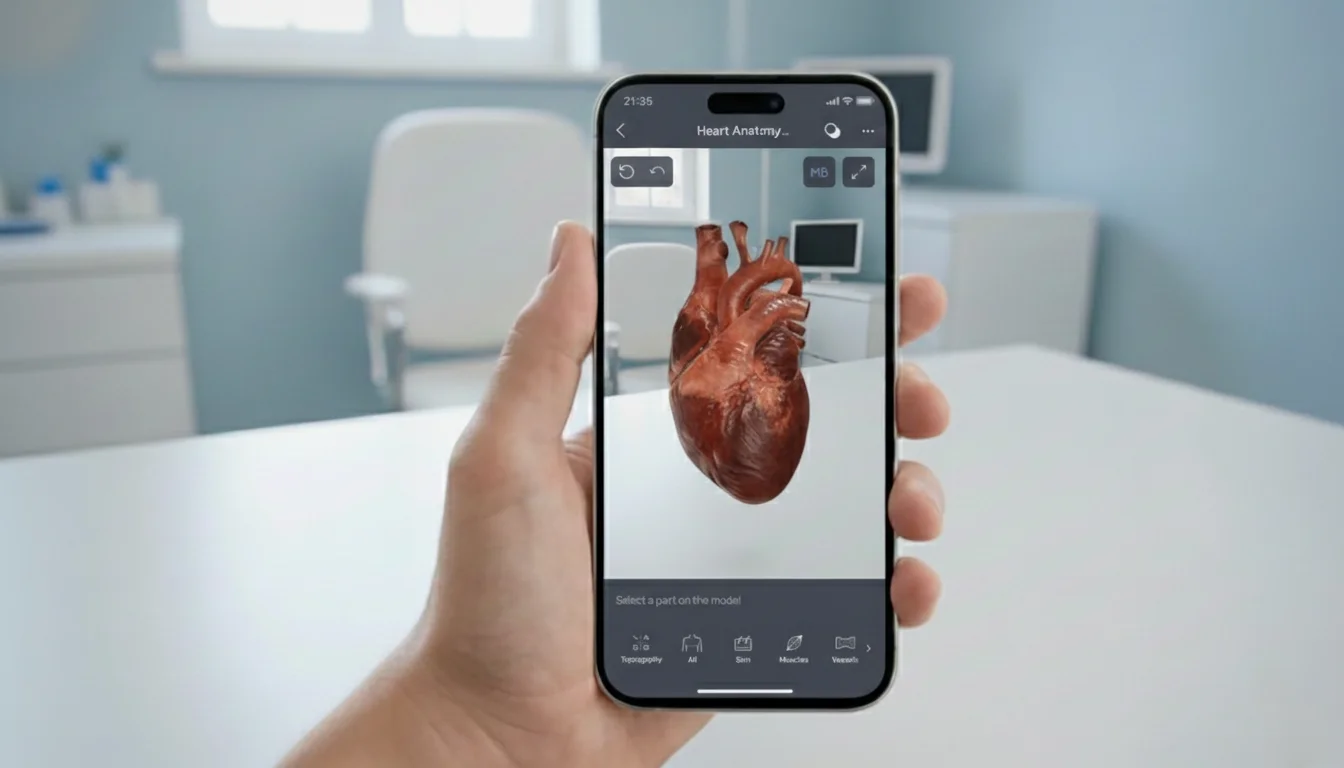
Now that we’ve gone through the strategies, it’s time to look at digital patient engagement tools that enforce them. But before we dive into the details, check out a quick overview.
Medical 3D visualization
Many people understand health information better when they can see it. That’s why 3D anatomy models and educational videos are so helpful.
During a consultation, doctors can use 3D atlases, such as VOKA 3D Anatomy & Pathology, to let patients zoom in, rotate models of organs, and explore body systems in detail.
As for dynamic processes, HCPs can show short animations on tablets or TV screens to make explanations of diagnoses or treatment more memorable.
Both visual solutions let doctors explain things faster and help patients follow along better.
Pros:
-
Improve health literacy through visual learning.
-
Make consultations more interactive.
-
Build trust by simplifying diagnoses & procedures.
Cons:
-
Require equipment for proper display.
-
Add costs due to licensing & setup.
Explore the human body in 3D with VOKA
Try the appPatient portals
Such portals provide secure access to health records and let users manage their care outside the clinic. They can check lab results, review medications, and access educational materials.
Also, patients can schedule appointments with automatic reminders, send messages to their healthcare providers, and handle billing or insurance tasks.
Main benefit for clinics? Less routine hassle. This means fewer calls, fewer repetitive questions, fewer manual tasks.
Pros:
-
Give visibility & control over health data.
-
Improve communication with providers via secure messaging.
-
Reduce administrative workload & save staff time.
Cons:
-
Carry privacy & security risks.
-
Raise costs & create integration challenges with EHR systems.
Telehealth platforms
Telehealth platforms let patients connect with doctors without leaving home. Such tools are especially useful for people who live far from clinics or have mobility challenges.
People can join secure video or audio consultations and receive digital prescriptions. Virtual waiting rooms and online scheduling keep visits organized, while integration with EHRs ensures doctors have the full picture.
Pros:
-
Expand access to care for remote patients.
-
Reduce no-shows & make visits more convenient.
-
Enable continuous monitoring without in-person trips.
-
Save costs for healthcare organizations & patients.
Cons:
-
Depend on reliable internet & device availability.
-
Carry privacy & security risks for online consultations.
-
Limit the ability to perform physical examinations.
Remote patient monitoring (RPM) systems
When doctors need to track patients continuously, RPM tools are essential. Especially if we talk about chronic conditions, where regular check-ins really matter.
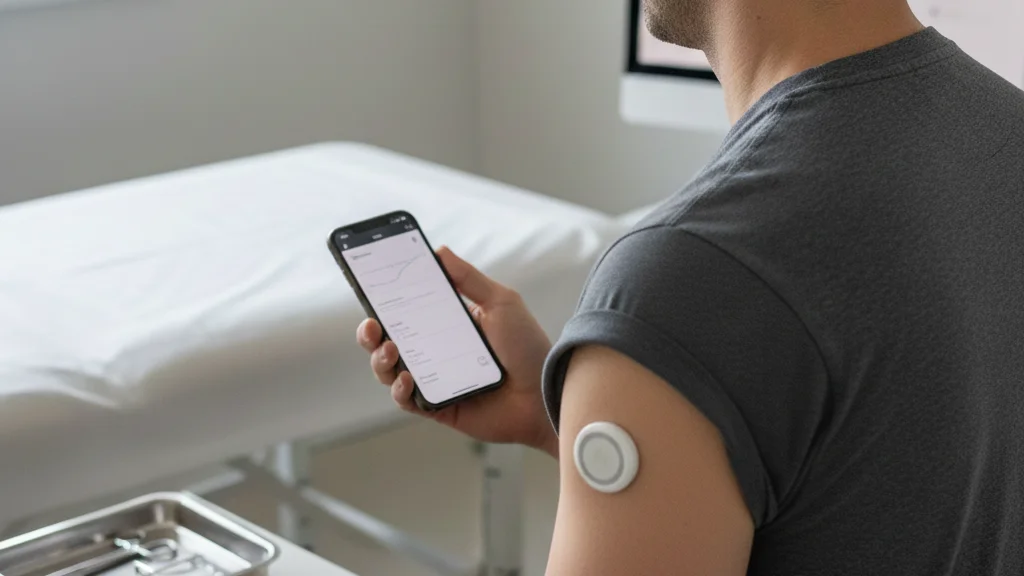
With wearable devices, people can measure blood pressure, glucose, and heart rate. Then, RPM tools automatically send the data to healthcare providers, so they can spot issues early and step in if something looks off.
Patients can track their own data with mobile apps, getting alerts when some abnormal readings appear.
Pros:
-
Detect issues early.
-
Improve chronic disease management.
-
Reduce hospital readmissions & emergency visits.
Cons:
-
Require investment in special devices.
-
Raise data privacy & security concerns.
-
Depend on patient compliance.
Mobile health (mHealth) apps
Mobile apps are among the most popular patient engagement tools in healthcare. They let people control their health habits 24/7 right from their phones.
Such apps include anything from fitness apps like step trackers to condition-specific tools for diabetes or mental health. Many of them track symptoms and set medication reminders.
For clinics and HCPs, mHealth apps empower more consistent patient monitoring without extra workload.
Pros:
-
Provide anytime access to health support.
-
Help manage conditions & track progress.
-
Encourage healthier habits.
Cons:
-
Vary in quality & reliability.
-
Lose engagement if patients stop using them.
-
Create integration challenges with EHR systems.
Chatbots & virtual assistants
When patients need quick answers, chatbots and virtual assistants are often the first point of contact. They provide instant support without waiting for a call or appointment.
Why integrate a chatbot into a clinic’s website or app? It can handle a lot of routine requests automatically. This means fewer calls, less pressure on staff, and faster responses for patients.
Over time, you’ll see better operational efficiency and reduced costs. Plus, your team will be able to focus on more complex cases where human interaction really matters.
Pros:
-
Provide instant, 24/7 support.
-
Reduce workload for healthcare staff.
-
Improve patient satisfaction with quick responses.
Cons:
-
Risk of giving inaccurate answers.
-
Require ongoing updates & AI training.
Real-life patient engagement examples

Here’s what healthcare teams are doing to help patients take an active role in their health.
Northwell Health: AI pregnancy chats
A New York-based hospital, Northwell Health, launched an AI-powered pregnancy chatbot to support expectant mothers.
It sends weekly, personalized messages based on each woman’s stage of pregnancy and self-reported risk factors. This spots small changes that can indicate a problem.
The chatbot links with Northwell’s care team, so if a woman’s responses indicate a serious issue like preeclampsia, she can quickly be escalated to in-person care. In a pilot with 1,632 participants, 96% reported satisfaction with the experience.
Why does it work?
-
Personalization: tailored messages for each stage.
-
Proactive communication: regular check-ins & reminders.
-
Integration with care teams for quick escalation.
AstraZeneca’s Access 360: pharma patient support program
AstraZeneca’s Access 360 is a support program that simplifies access to medications. It offers guides on insurance coverage, prior authorizations, pharmacy coordination, and claims management.
The program also connects individuals with co-pay savings and independent assistance programs, so financial challenges don’t get in the way of care.
Access 360 keeps patients informed throughout their treatment journey. As a result, they feel more confident managing therapies and following prescribed regimens.
Why does it work?
-
Broader access to medications & financial support.
-
Increased confidence in managing therapy.
-
Stronger connection with healthcare providers & pharma support.
Atrium Health: virtual hospital during COVID-19
During the COVID-19 pandemic, Atrium Health launched a “virtual hospital” to treat patients at home. Doctors and nurses monitored vitals daily, held virtual check-ins, and sent a physician to the home when needed.
The program cared for around 13,000 patients, with only 3% needing transfer or hospitalization.
People valued the convenience, continuous contact with providers, and timely guidance without going to the hospital. It was especially helpful for older adults, rural communities, and those with chronic conditions.
Why does it work?
-
Continuous remote monitoring with daily check-ins.
-
Reduced strain on physical hospital resources.
-
Improved access for vulnerable populations.
How to measure patient engagement: metrics and ROI
Tracking engagement helps healthcare organizations see what works and spot gaps. Here’s a metrics checklist you can rely on:
-
Activation rate – % of patients who start using portals, apps, or telehealth.
-
Frequency of use – how often patients log in, open apps, or interact with digital tools.
-
Adherence – following treatment plans, taking medications, attending appointments.
-
Response rate – participation in surveys, feedback forms, or educational modules.
-
Satisfaction – patient-reported outcomes or Net Promoter Scores (NPS).
-
ROI – financial and operational benefits, like reduced hospitalizations, fewer no-shows, and staff time saved.
Calculating ROI is simple:
1
Identify costs
Technology, staff training, marketing, support.
2
Measure benefits
Improved outcomes, efficiency, adherence, reduced readmissions.
3
Monetize benefits
Assign dollar values (e.g., cost saved from fewer hospital visits).
4
ROI (%)
(Monetized benefits − costs) ÷ costs × 100
By tracking these metrics, clinics and pharma companies can see real impact, justify investments, and make engagement strategies better.
Conclusion: building an effective patient engagement strategy
We hope these strategies and digital patient engagement tools give you practical ideas to make daily operations in your clinic smoother. Even small changes like sending reminders or displaying short educational videos matter.
If you want to start engaging patients with animations or interactive 3D models, don’t hesitate to contact VOKA! We can help you find or create content tailored to your needs, so you can wow patients at your very next consultation.
FAQ
1. What does patient engagement mean in healthcare?
Simply put, patient engagement is when people take an active role in their health. They follow treatments, make informed choices, and use tools to stay on track.
2. How can healthcare organizations improve patient engagement?
Healthcare organizations can boost engagement by helping people stay involved in their care. That means sharing clear info, checking in regularly, and using anatomy apps, videos, and other digital tools to make patients’ lives easier.
3. What are examples of patient engagement tools?
Examples include patient portals, mobile health apps, telehealth platforms, remote patient monitoring systems, chatbots, virtual assistants, and visualization tools.
4. How is patient engagement measured?
The key metrics include activation rate, frequency of use, adherence to treatment plans, response rates, satisfaction scores, and patient engagement ROI. Tracking them helps clinics and HCPs see what’s working or not and tweak engagement strategies accordingly.
5. Why is patient engagement important?
Higher engagement leads to better health outcomes and stronger trust between patients and providers. From the clinic’s side, it means fewer missed appointments, lower administrative workload, and reduced expenses in the long run.
Make VOKA your preferred source
See more VOKA articles in Google Search

Share
Table of contents

Thank you for your comment!
Your comment has been submitted for moderation and will be published soon. We'll email you once it’s live.