

A&P made easy: How to study and pass anatomy & physiology on your first try

Share:

Copy link

Share via Telegram

Share on Facebook

Share on LinkedIn

Share via WhatsApp

Share on X

Share via Email

Table of contents
A&P is one of the hardest subjects in medical school. Too many Latin terms. Too many systems. And last-minute cramming doesn’t work here.
We don’t say it’s impossible to learn, but most students struggle because they do it wrong.
In this guide, our doctors from the VOKA team will share the tips that helped them survive A&P as students. And that they still use today when teaching interns.
Learn how to study anatomy and physiology with less stress and pass your exams with confidence. Let’s dive in!
Why is A&P such a big deal in medical studies?
Anatomy and physiology aren’t throwaway classes. Without passing A&P, it’s practically impossible to progress in medicine, nursing, or allied health programs.
Let’s discuss why A&P stands apart from most other courses:
-
Сombines multiple sciences: A&P pulls together biology, chemistry, and even physics. In other words, you should be able to connect ideas from different fields at once.
-
Requires memorization & understanding: Yes, there are lots of Latin and Greek terms to cram. But exams also check if you can explain how and why systems interact, not just if you recall definitions.
-
Demands 3D thinking: You need to visualize how organs and structures relate to one another in space. For many students, this is where things get tricky.
-
Includes lab and practical exams: Medical students are no strangers to written exams, but A&P sometimes assesses students on real or virtual cadavers and models.
How to prepare for anatomy & physiology: basic plan
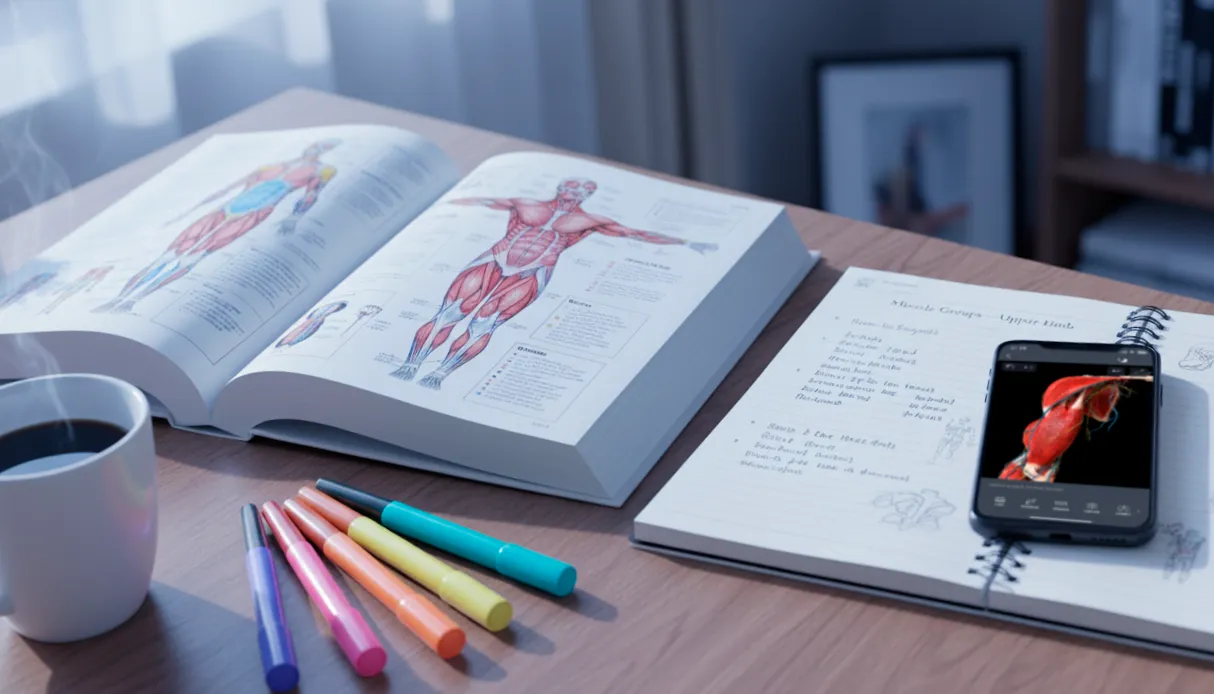
We’ve all been guilty of putting off studying until the night before an exam. However, that’s not a strategy for A&P success.
Here’s a simple step-by-step plan to help you stay organized:
Step 1: Map out the course
Look at your anatomy and physiology syllabus and divide it by body systems, such as cardiovascular, nervous, digestive, etc. Focus first on the topics that matter most for your exams. By doing that, you can manage your time better.
Step 2: Gather your study resources
Before you dive in, collect reliable A&P resources you’ll use regularly: web encyclopedias, apps, and 3D visualization tools. This way, you won’t waste time searching online every time you need to review something.
Step 3: Set weekly study times
Pick regular slots in your schedule for each topic. Short, consistent sessions work better than last-minute marathons and prevent burnout.
Step 4: Review often
Go over old material every week. Use quick quizzes and spaced repetition to keep what you’ve learned fresh while moving on to new topics.
Step 5: Track progress and adapt
Keep a checklist of what you’ve mastered and what’s tricky. Spend extra time on tough topics. You can also add extra resources like videos or guides to streamline studying and memorizing anatomy and physiology.
Tips for studying anatomy & physiology
With a clear roadmap in place, it’s time to explore practical ways to learn A&P smarter. Here’s what you can do:
Engaging with visuals
Visual learning is one of the best ways to study anatomy and physiology. It helps you see abstract concepts and better grasp how the body works.
The most useful visual tools at this point are 3D models of anatomy and biomechanics. With these, students can zoom, rotate, hide layers, or virtually dissect structures to really grasp how everything fits together.
For easier studying, you can download our VOKA 3D Anatomy & Pathology app to your mobile device. It puts a large collection of models at your fingertips, so you can explore and review them anytime, even on your way to an exam.
Explore the human body in 3D with VOKA
Try the appIn addition to models, you can watch dynamic medical videos to explore physiological processes in motion.
Сonnecting structure with function
In anatomy and physiology, structure and function go hand in hand. Every part of the body exists for a reason.
When you study an organ, tissue, or system, ask yourself: “What does this do?” and “How does it work this way?”
For example, the tiny alveoli in the lungs are easy to remember once you think about how their thin walls let oxygen pass into the blood. Connecting how something looks to what it does makes understanding much easier.
Applying knowledge
Studying A&P is about using what you learn. Test yourself with case studies, “what if” scenarios, or mini-experiments.
Here’s how you can apply your knowledge:
-
Teach a concept to someone else (even a teddy bear works!).
-
Connect theory to observations of your own body, like noticing muscle movements or heartbeats during exercise.
-
Ask “what happens if?” For example, what changes if blood flow is blocked or a muscle is injured?
Active use of knowledge strengthens memory and builds confidence for labs and exams.
Regular review sessions
Cramming may get you through a quiz, but long-term mastery requires consistent review. So, make short, weekly sessions part of your routine.
Here’s what you can do:
-
Test yourself: After reading, take quick quizzes to reinforce new information.
-
Keep a review log: Track which topics feel weak and need extra attention.
-
Focus on weak areas: Return to challenging topics regularly.
If you’re looking for a platform that combines expert medical content and self-testing, VOKA Wiki is a great option. It features articles supported by high-fidelity visuals and built-in anatomy quizzes to check your knowledge right away.
Tips for memorizing anatomy & physiology
A&P is full of long, weird words and complex systems. The good news? Several memory tricks can help you stick all that info in your head.
Mnemonics
Mnemonics turn long lists into simple patterns you can remember. All you need is to create associations that make sense for you.
-
Make acronyms or short phrases to remember lists (like cranial nerves or muscle groups).
-
Use visual cues by linking structures to familiar objects (a key-shaped bone = clavicle).
-
Personalize them, as unusual associations stick best.
Example: The rotator cuff muscles can be remembered as “SITS” – Supraspinatus, Infraspinatus, Teres minor, Subscapularis.
Flashcards & spaced repetition
Flashcards are a classic study tool because they break big topics into bite-sized questions and answers. Pair them with spaced repetition (reviewing material at intervals) to move knowledge from short-term to long-term memory.
-
Digital tools: Use apps like Anki or Quizlet to automate review and track progress.
-
Physical cards: Write the term on one side, function or location on the other.
-
Mix it up: Shuffle cards to avoid memorizing order.
-
Group practice: Quiz each other out loud, as it’s fun and reinforces memory.
"Back in med school, I loved making flashcards. My little trick? I kept easy ones in one pile, the tricky ones in another, and spent extra time on the hard ones. Focusing on cards with my weak spots made a huge difference when exams rolled around."

Linking roots & meanings
A lot of A&P terms come from Latin and Greek. Once you know the basics, long words start to make sense. Learning roots is like a shortcut for understanding unfamiliar terminology.
-
Start with common roots: Brachium (arm), hepato (liver), myo (muscle), neuro (nerve).
-
Break words down: “Gastroenteritis” = stomach + intestine + inflammation.
-
Keep a list: Write down new roots and review them regularly.
Diagram labeling & drawing
Working with diagrams helps you remember faster. When you draw or label something yourself, it sticks much better than just reading.
-
Draw from memory: Sketch a structure, then check yourself.
-
Use a blank page: Try to recreate a whole system without looking.
-
Add your own notes: Use colors, arrows, and labels to connect ideas.
-
Practice often: Even quick sketches can improve retention.
Chunking information
It’s easier to remember A&P when you don’t try to learn everything at once. Group related information into small, manageable sets.
-
Group similar items: For instance, muscles that move the forearm.
-
Learn in small sets: Study 5-10 items at a time.
-
Connect them later: Link smaller groups into bigger systems.
-
Apply to processes too: Break down steps like the cardiac cycle.
Thus, you feel less overwhelmed during studies and recall information faster on an exam.
How to prepare for A&P exams

Every exam has its own rules. Even if you know the material well, you still need to prepare for the specific format. Here’s what to focus on:
Understanding the exam format
Before you start studying, figure out what to expect. Say, a lab exam where you identify structures on models is very different from a multiple-choice test.
So, different formats require different preparation.
-
Check question types: Multiple choice, labeling, short answers, or practical tasks.
-
Study smart: Spend more time on important sections that carry more points.
-
Practice the format: Learn to label structures or write short answers — whatever you’ll face on the exam.
Training with mock exams
How to build confidence for the exam day? The easiest way to get ready is to simulate it, and here’s how:
-
Hunt down old exams, online quizzes, or question banks to see what’s usually asked.
-
Set a timer and do full practice tests like the real exam to check your pacing.
-
Don’t skip it when you get something wrong. Figure out why, so you don’t repeat the same mistakes.
Time management during the exam
Even if you know the material, poor time management can hurt your performance. Figure out a plan to maximize your score.
-
Quickly scan the entire exam before starting to get a sense of structure and questions.
-
Allocate time per section, leaving more for complex questions.
-
Flag difficult questions to return to later if time allows.
Mental and physical prep
Your brain works best when your body is happy. Don’t skimp on sleep, eat well, drink enough water, and get a little movement. Even a short walk can help you think more clearly.
Before an exam, take a moment to relax and calm your mind.
“Before exams, I used a simple breathing trick: inhale for 4 seconds, hold for 4, and exhale for 6. A few rounds like this really helped me calm down and focus.”

Stretch, roll your shoulders, and shake out tension. Managing stress is just as important as memorizing facts — it helps you access everything you’ve studied.
Your A&P cheat sheet
We hope our tips will help you study anatomy and physiology smarter and feel less stress during exams.
For a quick reference, we’ve compiled everything into a concise table — a handy guide you can check before study sessions or right before an exam.
On a final note
A&P can feel tough, but with the right approach, it’s totally doable. The main thing is to study smart: stay organized, actively engage with the material, and review regularly. With consistent effort, you’ll really lock the info in and build confidence.
For an extra boost, you can try VOKA 3D Anatomy & Pathology. Our team designed this 3D atlas specifically for students so that you can study anatomy and physiology with interactive tools anytime, anywhere!
FAQ
1. Why is anatomy and physiology so hard?
A&P can feel overwhelming because there’s a ton of new terms, you need to picture structures in 3D, and you have to understand how different systems work together. The good news? With the right study strategies and visual tools, it’s manageable.
2. Why is it important to learn anatomy and physiology?
Anatomy and physiology give you the foundation for everything in medicine and health sciences. Knowing how the body is built and how it works helps you in labs, in the clinic, and on exams. Basically, it’s the stuff you can’t skip if you want to succeed in a medical career.
3. Why do we study anatomy and physiology together?
We study them together because you can’t really understand one without the other. Knowing what something looks like (anatomy) makes it much easier to see how it works (physiology). Learning them side by side just makes everything click.
4. How to prepare for anatomy and physiology on your own?
Studying A&P solo works best if you have a plan. Break the course into body systems, set a weekly schedule, and revisit material regularly. Use textbooks, flashcards, and the best anatomy apps to see the structures. Mix in memory tricks like mnemonics and chunking, track your progress, and tweak your plan for the topics that give you the most trouble.
5. How to study anatomy and physiology for nursing?
The overall approach is the same, but the focus is different. Nursing students don’t need to go as deep into every detail as doctors. Instead, focus on how systems relate to patient care: symptoms, vital signs, and how the body responds to treatments. Use visuals, practice with case scenarios, and try explaining concepts in simple terms as if you’re talking to a patient.
6. How to memorize anatomy terms fast?
Don’t try to brute-force it. Break long terms into parts, learn common roots, and use simple mnemonics to make them stick. Flashcards with spaced repetition also help a lot as reviewing terms over time is what moves them into long-term memory.

Share
Table of contents
Thank you for your comment!
Your comment has been submitted for moderation and will be published soon. We'll email you once it’s live.